
Typhoon approaching Japan. August 15 and 16.
Typhoon No. 7 will be coming to Japan around August 15 and 16.
It was originally forecast to make landfall in the Kanto region, but the latest forecast has it making landfall in the Kinki region.
Those traveling to Kyoto and Osaka should pay attention to the weather forecast.
Even if it doesn’t make landfall in Tokyo, the winds will be strong, so don’t let your guard down.
Forecasted path of typhoon No. 7.
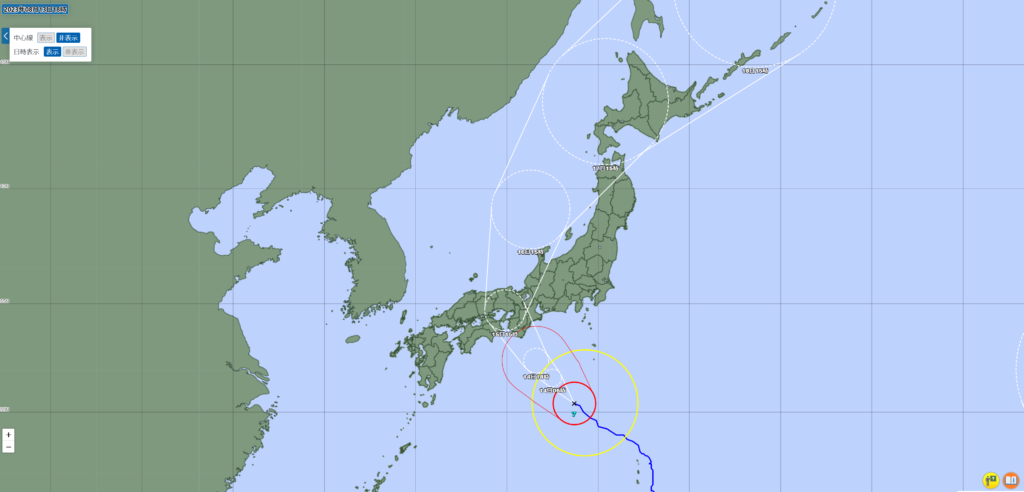
In Japan, typhoons arrive every year in the summer time. In Japan, typhoons are numbered in the order of the year.
This typhoon is No. 7, which means it is the seventh typhoon.
This year, no typhoon has hit Tokyo yet, but I think typhoons hit Tokyo at least once or twice a season.
When a typhoon strikes, it causes heavy rains, strong winds, and high waves. In fact, in all the years I have lived in Tokyo, I have never experienced any damage to my house or injury.
When a typhoon hits, I respond to the extent of putting away flower pots that are outside in the house.
However, for safety reasons, planes and trains may stop, and some highways may be closed.
Travelers to Japan should also take care to change their travel and accommodation reservations.
Traffic Impact.
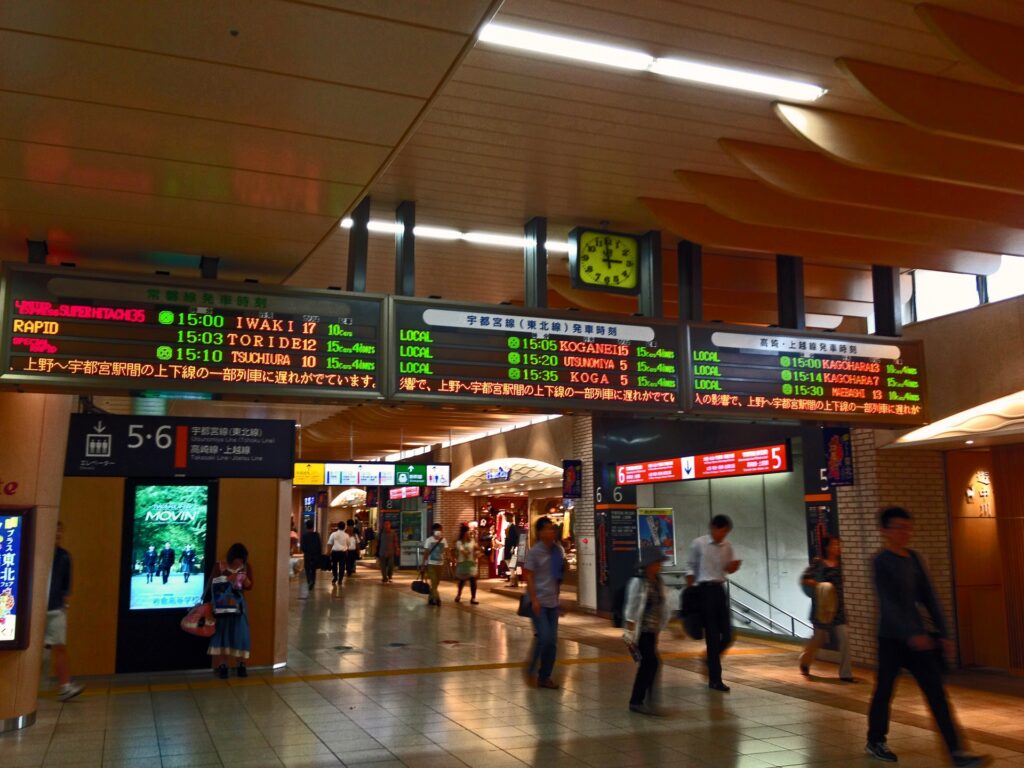
Typhoons can affect the time it takes to reach Japan depending on their speed of progress,
This typhoon No. 7 is moving slowly and is forecast to cross the Kinki region on the 15th and 16th.
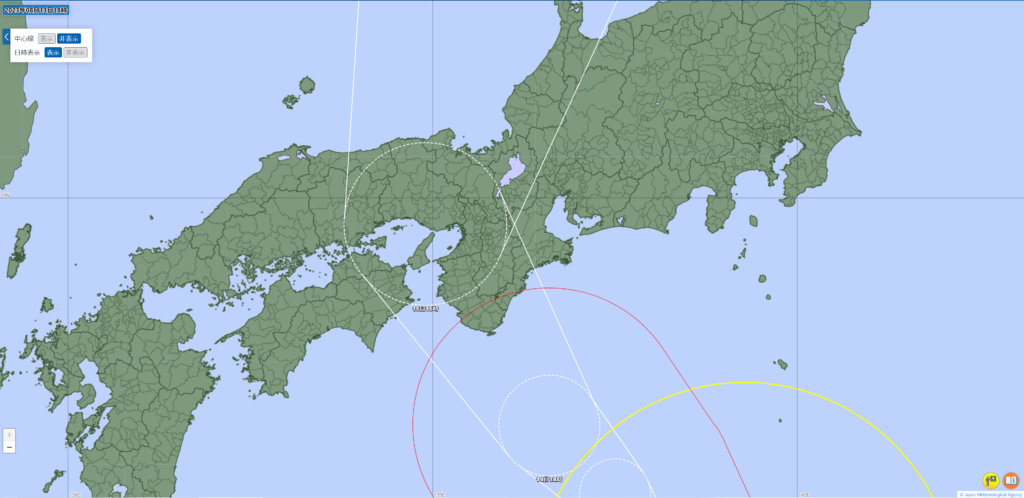
Information on typhoons is released by the Japan Meteorological Agency, the administrative agency of Japan.
https://www.jma.go.jp/jma/indexe.html
The site is also available in English and other languages, so it can be very helpful when making travel plans.
Also, for information on train operations in Japan, please refer to the YAHOO!
https://transit.yahoo.co.jp/
In Japan, various railroad companies operate transportation systems in different regions, and it is more efficient to obtain information from a portal site rather than checking each company’s website.
For example, the Yamanote Line, which circles around Tokyo, is operated by JR East, and the Shinkansen, used to go from Tokyo to Kyoto or Osaka, is operated by JR Tokai.
There are six JR companies alone: Hokkaido, East Japan, Tokai, West Japan, Shikoku, and Kyushu.
In addition, there are many other companies other than JR, such as major private railway companies (translated properly in English?). In Tokyo alone, there are Odakyu, Keio, and Kyushu.
In Tokyo alone, there are Odakyu, Keio, Keisei, Keikyu, Seibu, Tokyu, Tobu, etc. I think there were more.
In Osaka, there are Hankyu, Hanshin, etc. It is complicated because there are many companies with similar names.
This is a bit of a digression, but there are otaku in Japan who study these complicated railroads in detail.
They are called railroad enthusiasts or railroad otaku, and they range from simple railroad fans to otaku who ride trains, otaku who photograph trains, and even otaku who build model trains,
The world of otaku is very subdivided. There are even some stores in Akihabara and other areas that specialize in such things.
Back to the story
Because of the complexities of such railroads, I think it would be easier to check information on a portal site like yahoo.
I know that many people who travel to Japan are thinking about having fun at the beach or in the mountains, but please be aware of the weather during this time of year and enjoy Japan safely.


[…] has the potential for disasters such as earthquakes and typhoons.(See my blog on the recent typhoon if you like!)I have lived in Tokyo so far and have not been directly affected,I have been preparing for […]