
In Japan, we greet the new year with letters. Here are some New Year’s greeting cards.
Hello, this is Kimura from Tokyo. Today I would like to talk about Japanese culture. In Japan, we greet the New Year with a letter. These letters are called nengajo. What is a New Year’s greeting card?
Why do Japanese people send New Year’s cards? Here we introduce the history, meaning, and method of making New Year’s cards.
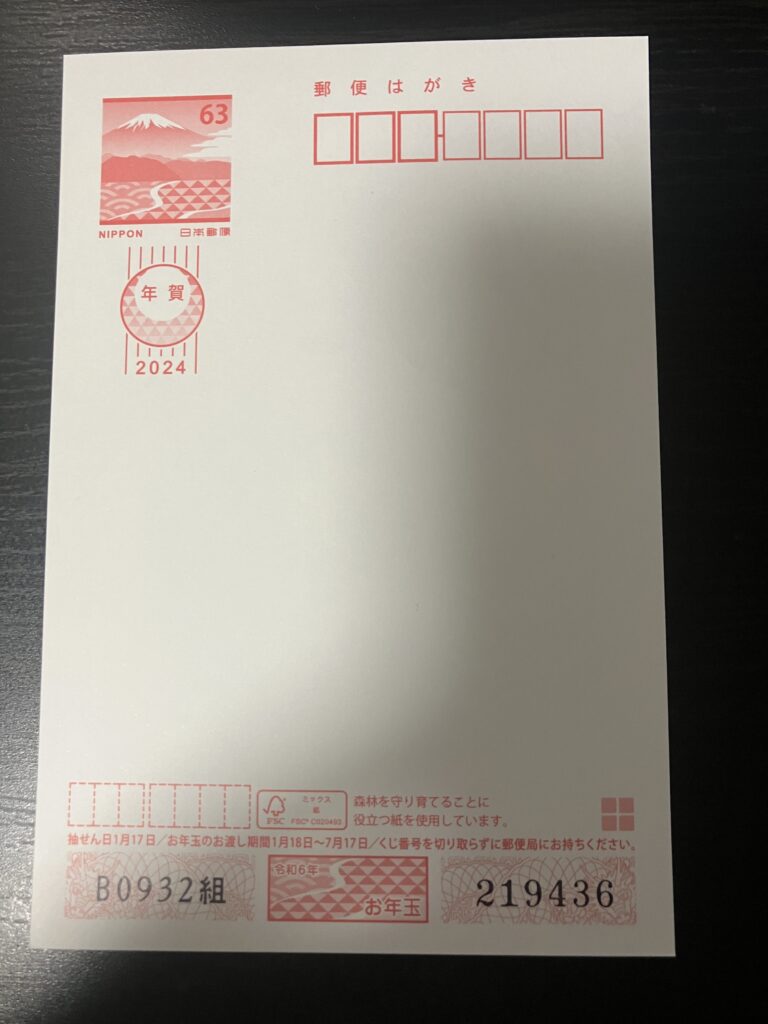
What is Nengajo.
Nengajo are greeting cards sent to friends, relatives, and acquaintances in the new year. In nengajo, people write about what they and their families are up to, their feelings of gratitude, and their aspirations for the New Year. In addition, New Year’s cards contain pictures and characters of the twelve animal signs of the Chinese zodiac, known as the Chinese zodiac (えと). The Chinese zodiac came from China, and each animal has its own characteristics and personality.
For example, the year 2024 is the year of the dragon. The dragon is an imaginary creature and has long been a symbol of power in the East. By including the Chinese zodiac in a New Year’s greeting card, you can express your fortune and wishes for the year.
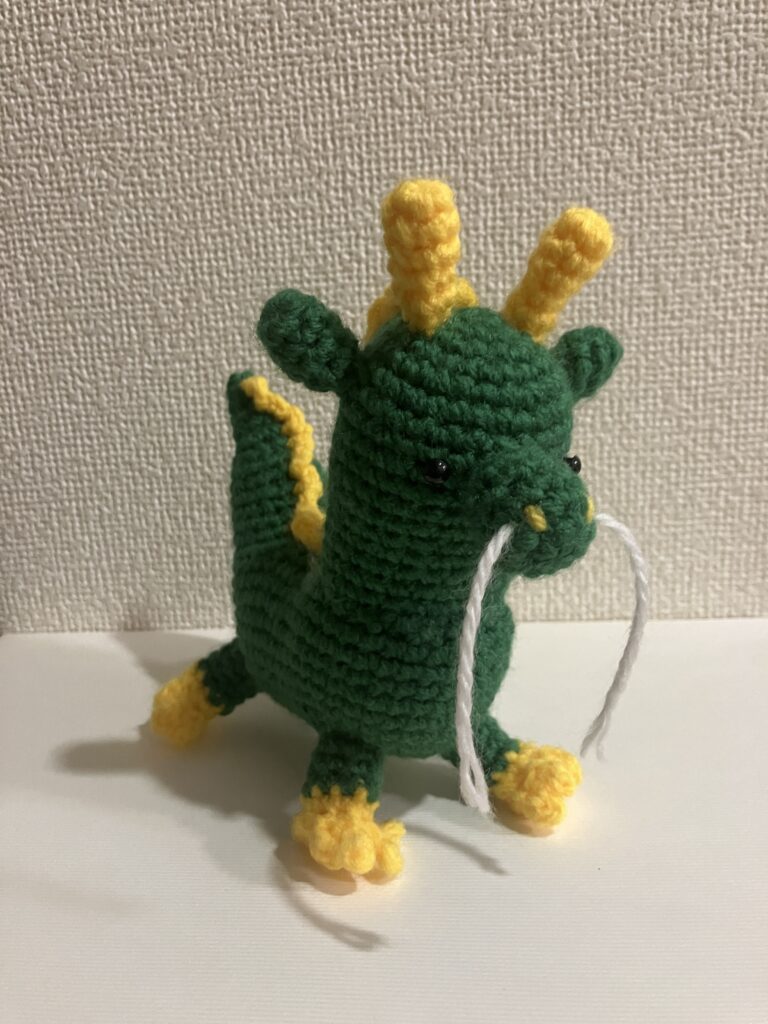
Nengajo have been around for a long time.
The history of nengajo dates back to the Heian period (794-1185). At that time, aristocrats and warriors sent letters to greet the Imperial Court and their superiors on New Year’s Day. In the Edo period (1603-1867), the custom of greeting the New Year spread among common people as well. In the Meiji period (1868-1912), the postal system was developed and New Year’s cards became common.
Today, the Internet and smartphones have made it easier to keep in touch, but Japanese people still cherish the New Year’s greeting cards. It can be said that New Year’s greeting cards are a cultural expression of Japanese thoughtfulness and courtesy.
How to make a New Year’s greeting card.
So how do you make a New Year’s card?
Nengajo are made using special postcards sold at post offices and convenience stores. The postcards are printed with designs of the Chinese zodiac, seasonal plants, etc., but you can also add your own pictures and photos. You are free to write whatever you like on the postcard, but in general, the order is as follows
1.Address: Write the name and address of the recipient. Honorific titles such as “sir” and “san” should be used.
2.Greetings: Write a standard greeting such as “Happy New Year” or “New Year’s greetings”.
3.Update: Write an update on your or your family’s health, work, school, etc.
4.Words of thanks: Thank you or apologize to the person you are writing to.
5.New Year’s resolutions: Write your goals and wishes.
6.Signature: Write your name and the names of your family members.
Nengajo should be posted between December 15 and December 25,
They will be delivered on January 1 of the new year.
Be sure to thank the postman every year.
In my case.
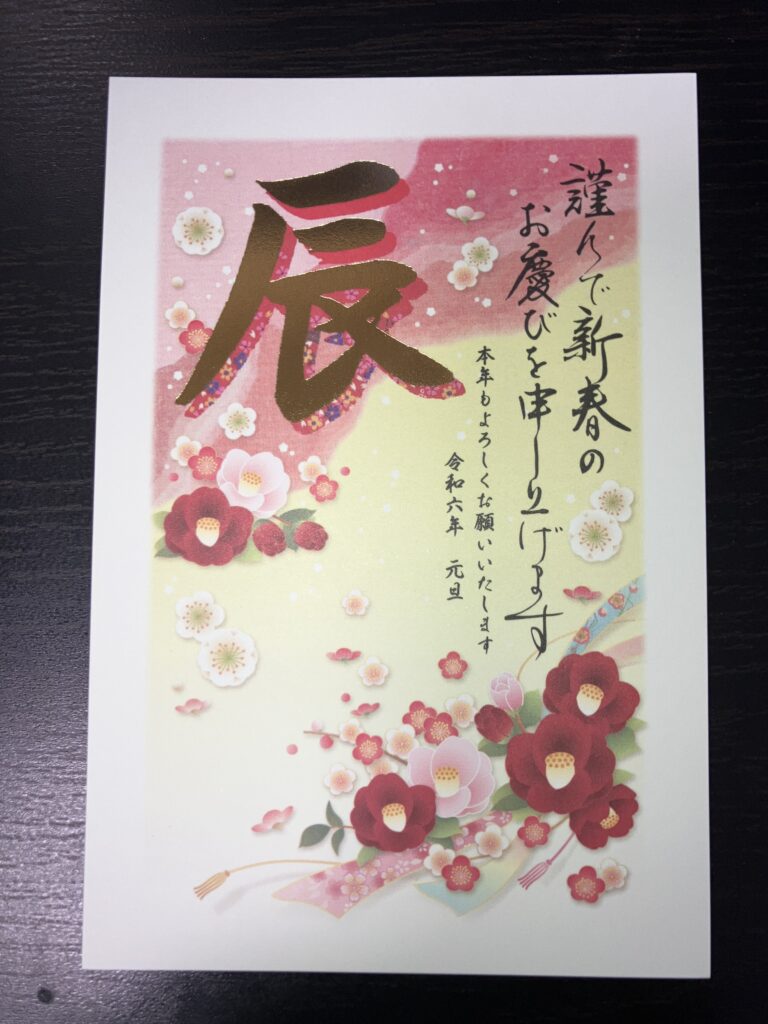
I use the nengajo sold at 7-Eleven every year.
They are gorgeous with gold printing, which is difficult to achieve with a home printer.
The Japanese words written here say, “Be good to each other again this year.
The above is an introduction to the Japanese culture of nengajo. Nengajo is a heartwarming tradition of the Japanese people. So, please have a happy New Year.
Translated with www.DeepL.com/Translator (free version)

