
I forgot my mask when I tried to go to the hospital. I rushed to buy a mask and found the soba noodles I was looking for!
This is Kimura from Tokyo.
I finally managed to get my hands on the instant noodles with red ginger tempura soba that I introduced on this blog around October last year. I had given up on it because it was a limited-time-only product, but I happened to find it when I went into the store!
I went out to go to the hospital, but I forgot my mask and saw it where I went to buy one.
This year is off to a good start.
Thanks to forgetting my mask, I was able to buy this soba.
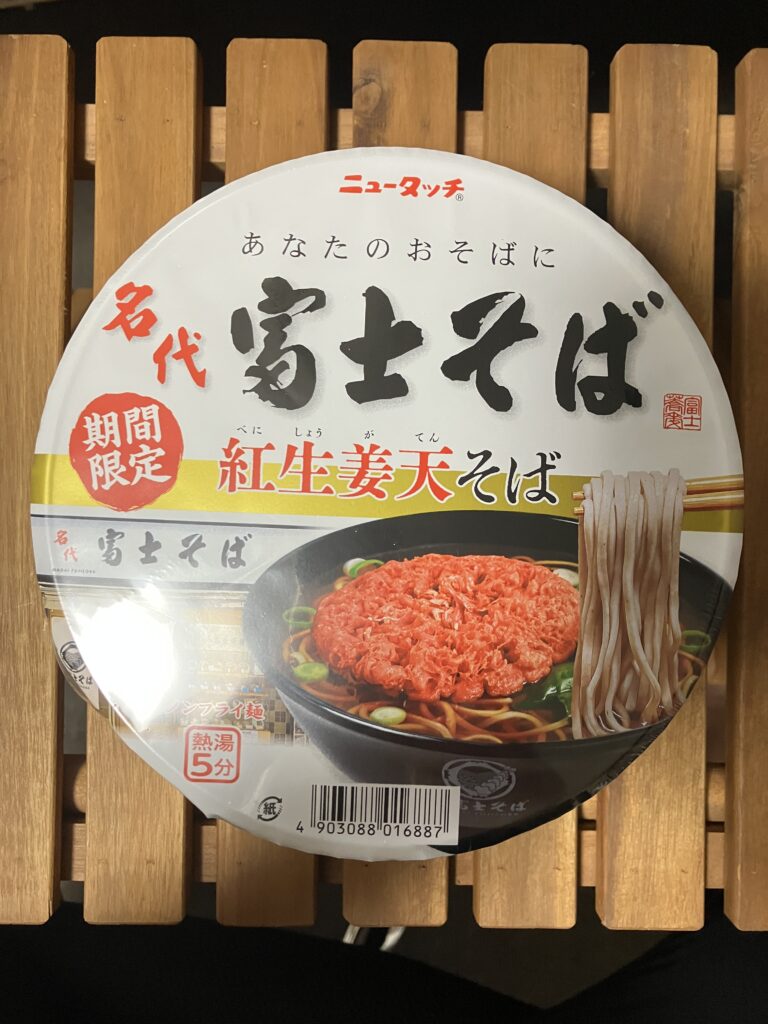
It is an instant noodle from Fuji Soba, a local food in Tokyo.
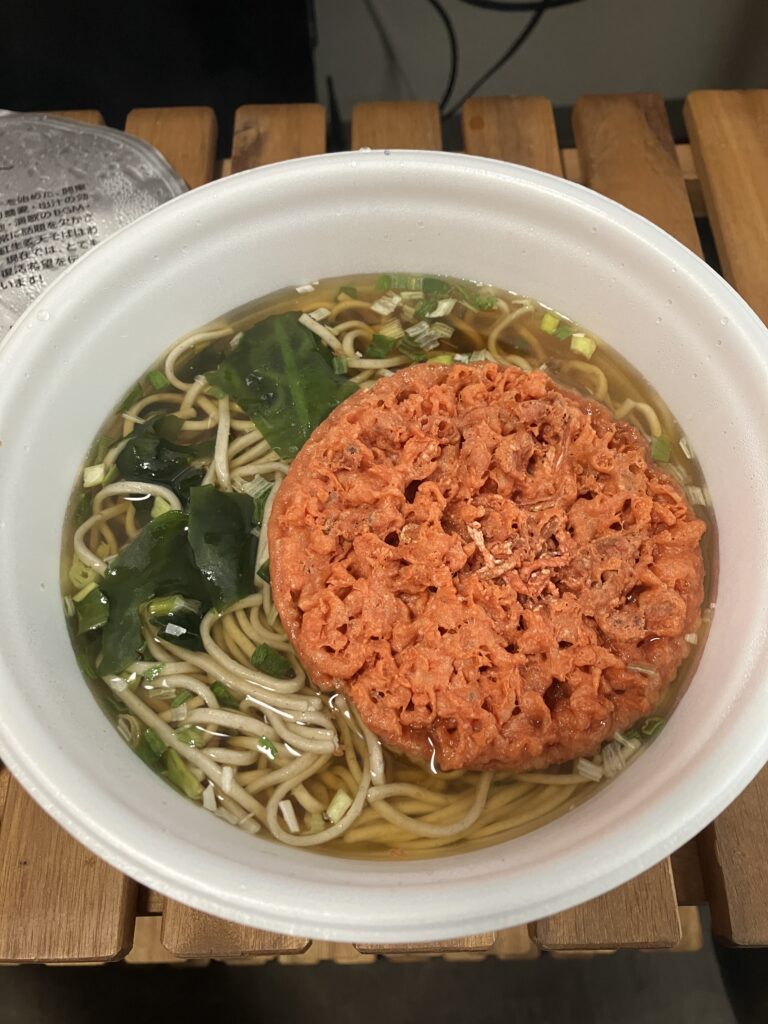
We introduced a picture of bright red tempura in a previous blog, but the picture is really not processed. The real thing is also bright red. It is actually red ginger, which is cut into thin strips, wrapped in batter, and deep-fried to make tempura. Soba is characterized by a thick broth based on bonito dashi, which has a strong flavor.
In Japanese, the taste is described as “shorai” (salty).
This is a very familiar taste to Japanese people.
Now, let’s open the package.
It is a product of a Japanese food manufacturer called Nu-Touch, and I believe it cost 275 yen.
I am not sure exactly, but I think it was 240 yen when it was sold in limited quantities a few years ago.
Prices seem to have risen somewhat in Tokyo as well.
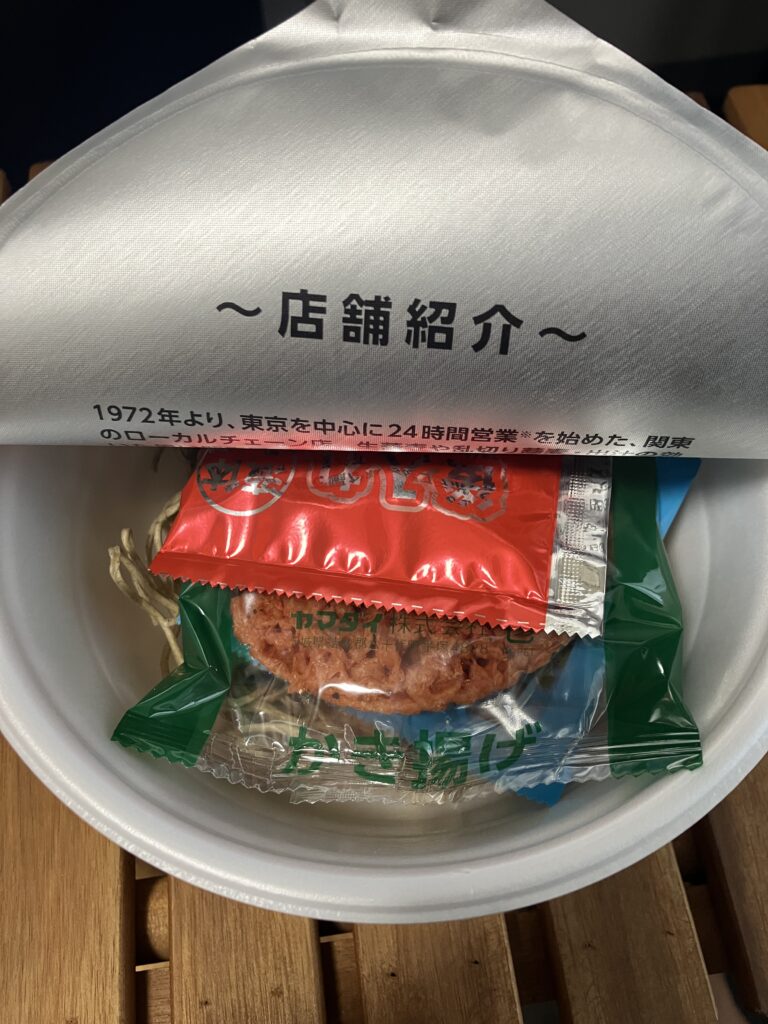
The noodles, yakumi (green onion and wakame seaweed), and red ginger tempura are served separately.
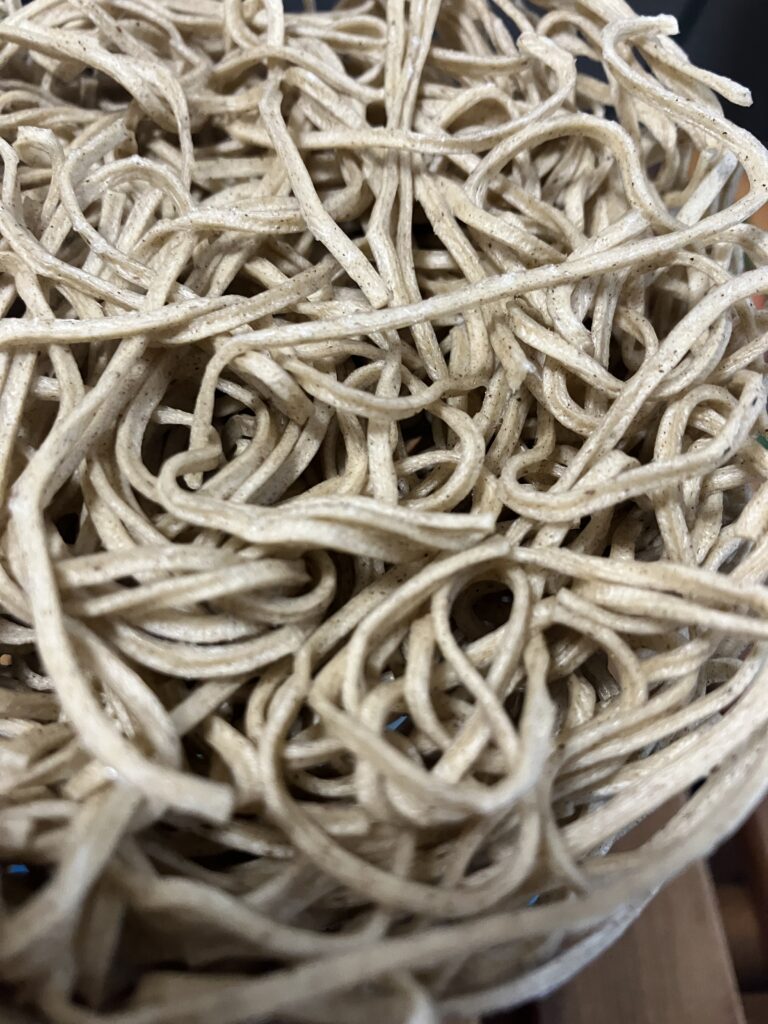
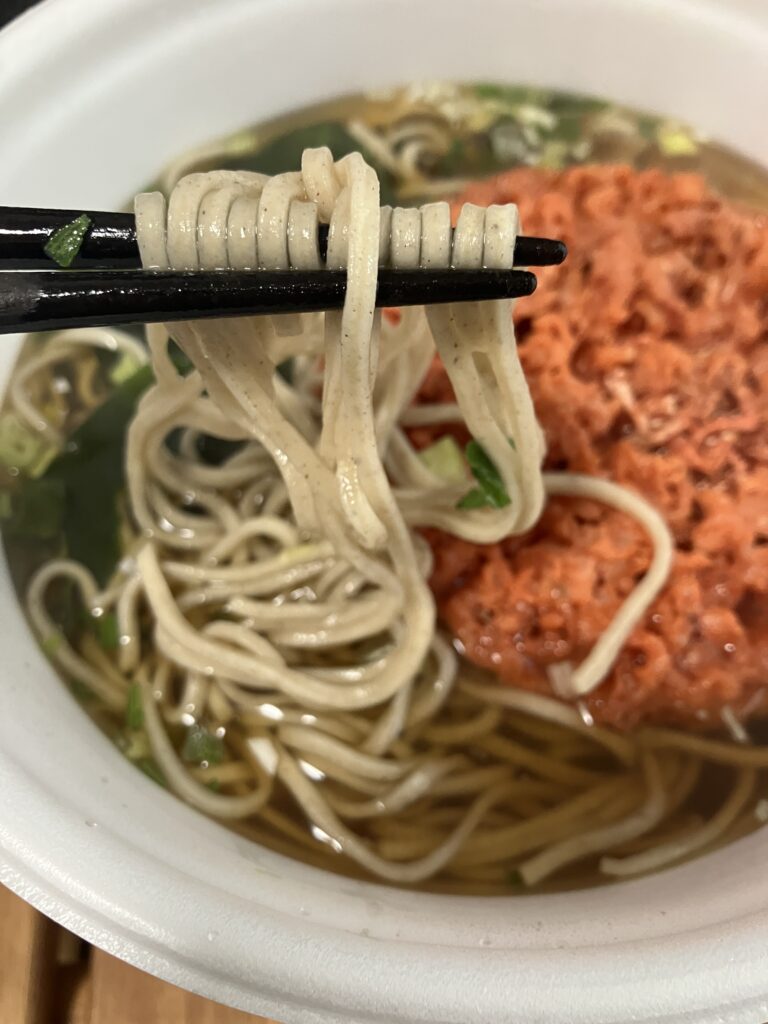
Unlike Ramen, Soba has a slightly darker color.
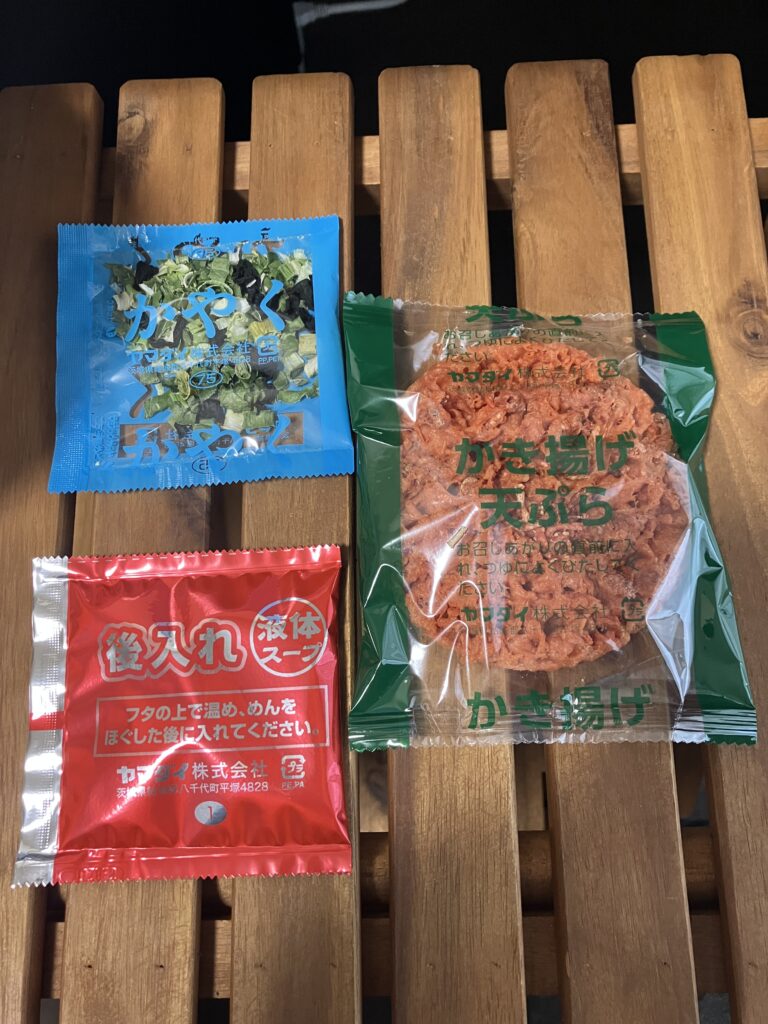
There are three bags in the package,
Blue → Dried wakame seaweed and green onion called kayaku.
Green → red ginger tempura.
Red → soup.
It takes 5 minutes to fill with hot water.
The correct way to make the soup is as follows
Put kayaku (blue bag) and then pour hot water.
Put the soup (red pouch) on the lid and wait while it warms up.
Put the tempura (green bag) in just before eating.
I think it means that the tempura is crispier and tastier if it is put in just before eating.
Here is the finished product.
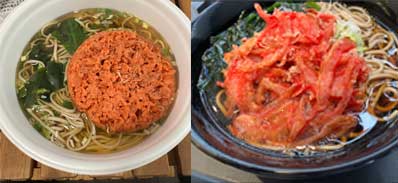
Here is a comparison with the restaurant’s Soba.
There is a difference in appearance, but how does it taste?
I think it is a little less salty than the one at the restaurant. But the taste reminds me of Fuji soba!
I think I can reproduce the taste of the restaurant’s tempura, even if it is difficult to do so.
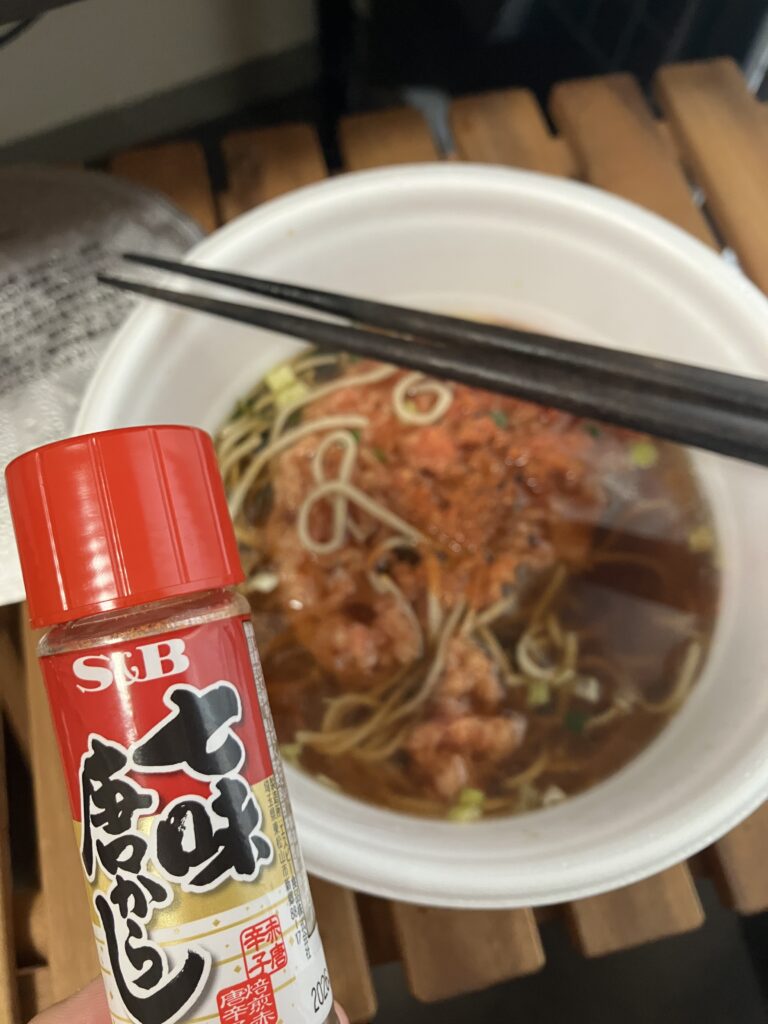
However, I would like to have the spice that is on the table in that restaurant.
Shichimi. I will add shichimi that I have at home.
And at the end of the meal, I drink a glass of cold water.
Fuji-soba is a place where you can refresh your salty mouth with chilled water.
I really feel like I have been to Fuji Soba.
(I wonder who will enjoy this blog…)
Let me introduce Fuji Soba once again.
Fuji Soba is not a high-class restaurant.
It is inexpensive and quick to eat. Some restaurants may not even have chairs.
It is the kind of restaurant that many working salarymen and others visit at lunch time.
It should be called fast food.
I would be happy if this restaurant can be described as a local food in Tokyo for those who are interested in Japan.Also,
If you have a chance to travel to Tokyo, please visit us again.
Finally, although I wear a mask less often, don’t forget to wear it when you go to the hospital or other places.
Thank you for reading to the end.
Kimura

