
- Step1 Open the package and take out the “sauce” and “mustard”
- Step2 Peel off the clear film on top of the natto
- Step3 Stir the natto
- Step4 Stir in the sauce and mustard
Learn more about how to eat natto, the pride of Japan’s superfood!
This is Kimura from the northern part of Tokyo.
I would like to introduce how we Japanese eat natto on a daily basis. I am sure there are many amazing fermented foods in the world, but in Japan we have natto, a food made from fermented soybeans. People from other countries may be surprised by the unique appearance and texture of natto. However, natto is very nutritious, healthy, and inexpensive, making it a national food for many Japanese people.
In this blog, we will discuss how to eat natto, recommended toppings and finally
I would like to introduce some amazing ways to use natto other than eating it.
Natto?
Natto is a fermented food made by fermenting soybeans with the bacillus natto.
There are various theories as to when the Japanese began eating natto, but it is said that something similar to today’s natto was already being eaten around the end of the Jomon Period. It is possible that people ate natto during this period, since rice cultivation methods were introduced from China and rice straw has a lot of natto bacteria attached to it.
Another city north of Tokyo called Mito is the home of natto. There, natto wrapped in straw is still sold as a specialty product.
There are different types of natto
There are three main types of natto.
The difference is the soybeans. In Japan, each household has its own preference.
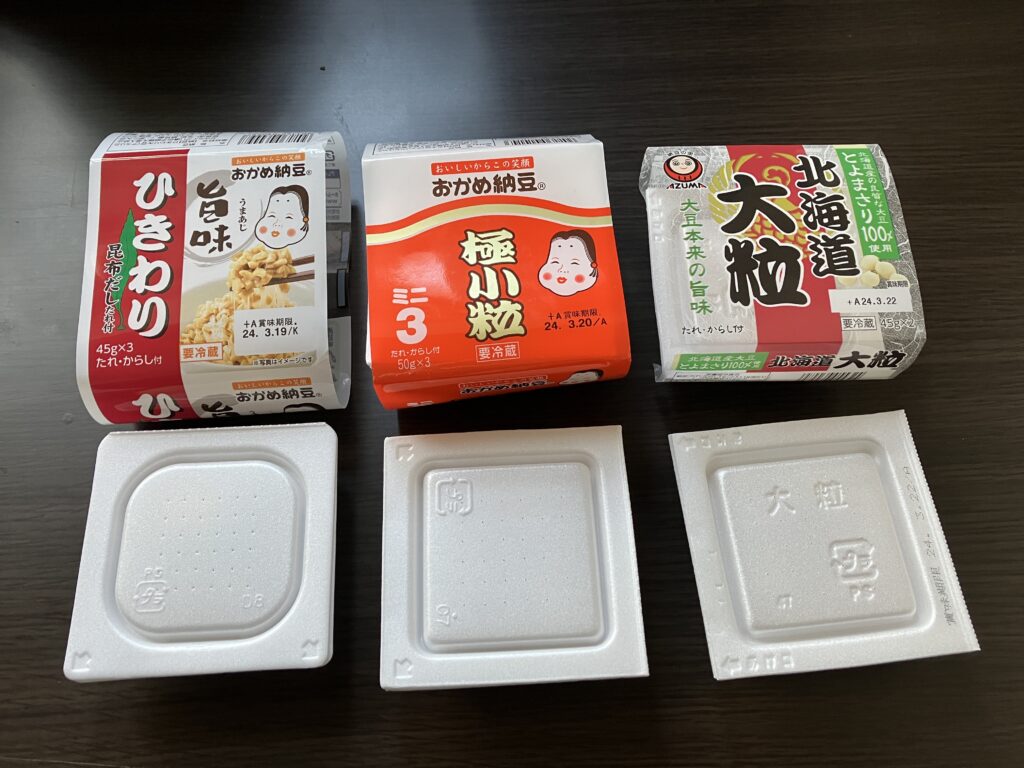
Left: Ground
Middle: small grain
Right: large grain
By the way, my standard is the medium small grain. I think you can find them in stores that sell Asian foods overseas as well. Both of these products are priced around 100 yen for two or three packs at supermarkets in northern Tokyo. If you go to a discount supermarket, it is not unusual to find them in the 80 yen range.
Let’s open the package right away.
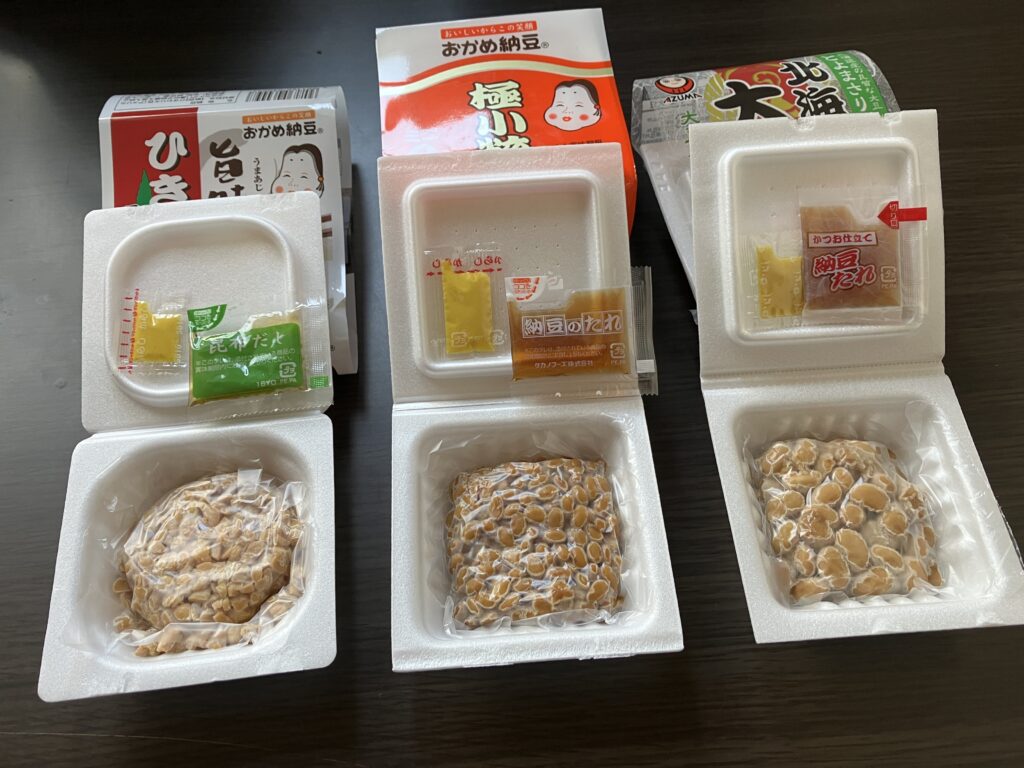
In addition to natto, it comes with tare and mustard.
Tare is usually seasoned with a sweet soy sauce-like flavor. It also comes with “mustard,” which may come as a surprise. Let’s take a closer look at natto.
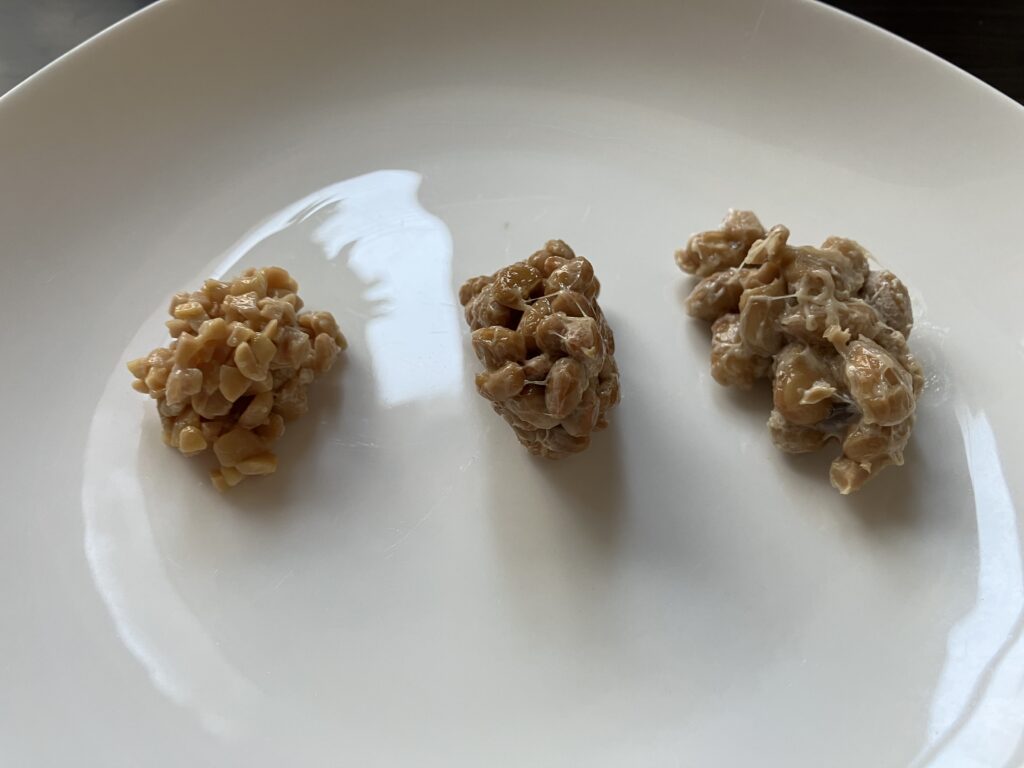
Three types of natto on a plate.
Left: Hikiwari is processed so that the soybeans are crushed into smaller pieces. The texture is gentler, so even children can easily eat it.
Middle: This is a standard natto made from small soybeans. I think this was the only kind available when I was a child. (There are some regional differences, though.)
Right: Large grain is made from soybeans about 1.5 times larger than small grain. You can enjoy the taste of the beans.
How to make natto
Before we go any further, let us summarize the key points on how to make it.
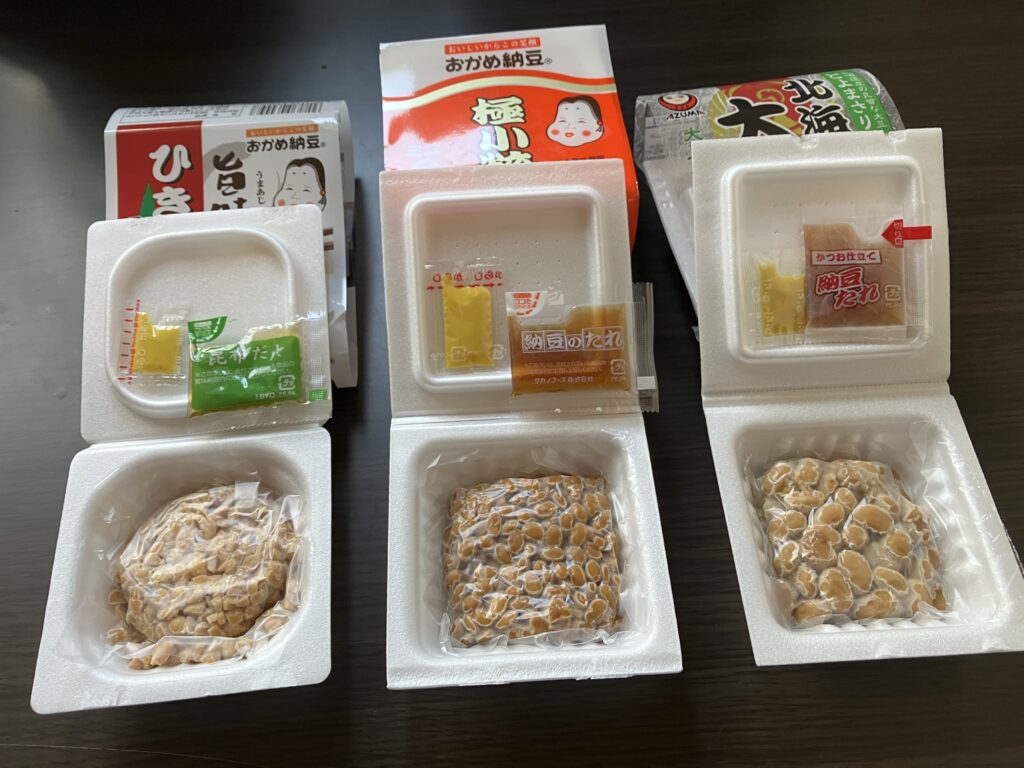
Step1 Open the package and take out the “sauce” and “mustard
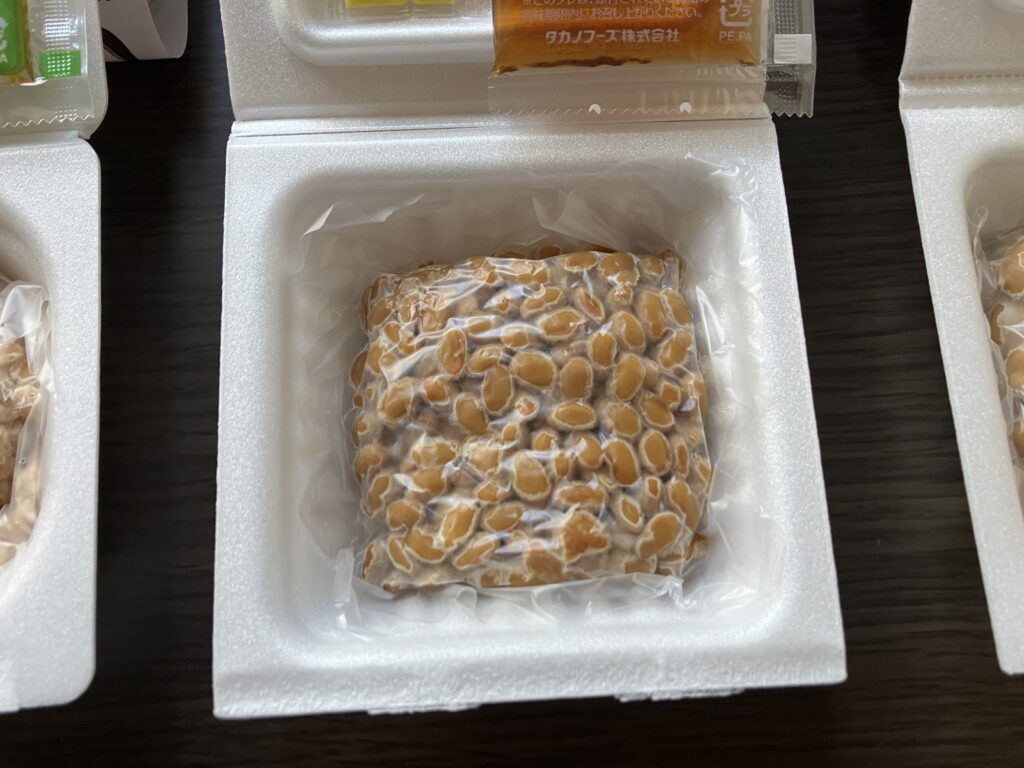
Step2 Remove the clear film on top of the natto
Because natto is sticky, it sticks to this film, which can be easily removed by peeling it off slowly. However, there are people who think of various techniques for this process.
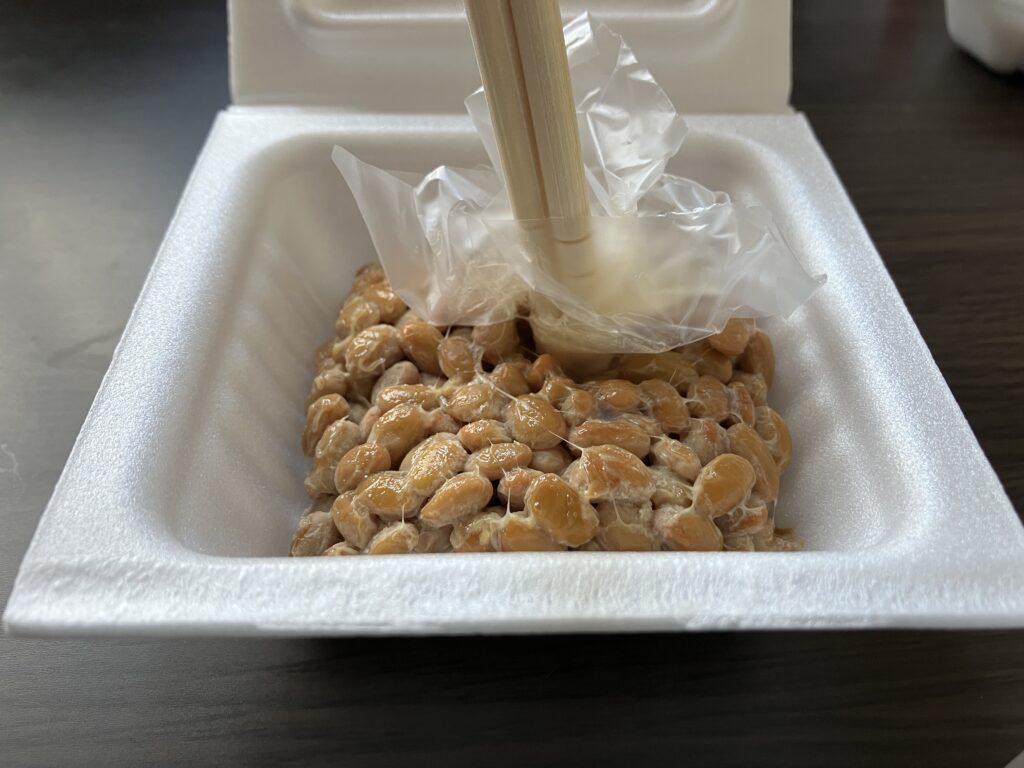
Tornado style
It is called the tornado method on the Internet and elsewhere. It is a technique of twirling and twirling with the other side of fingers or chopsticks.
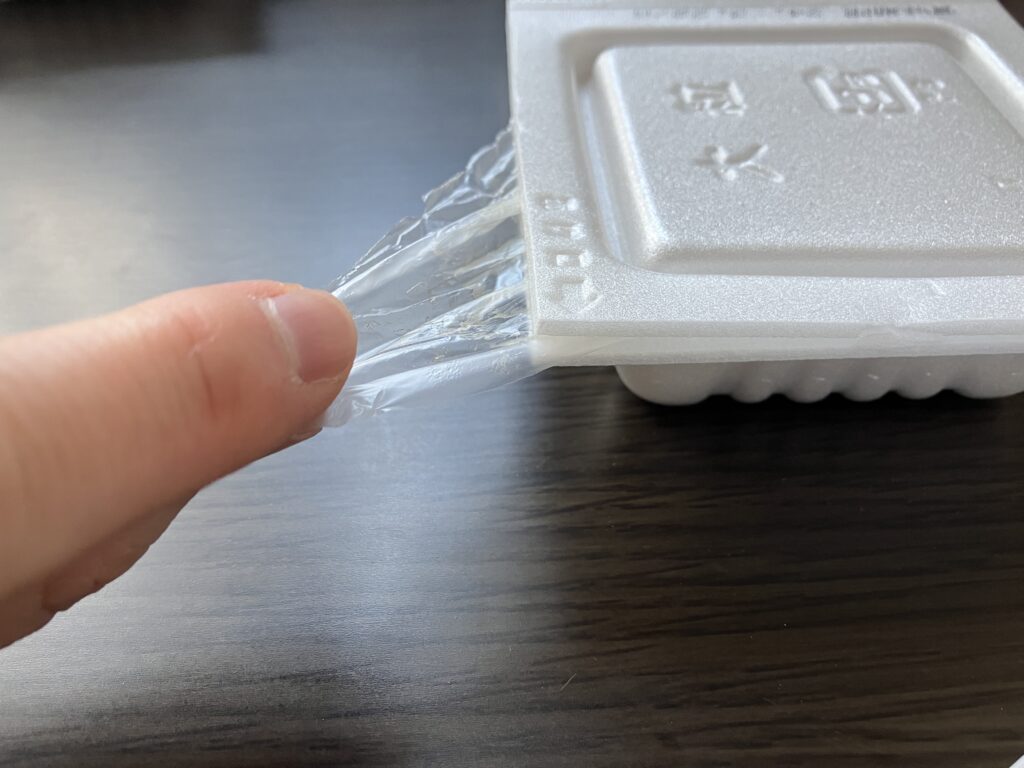
Slide type
Pick up the edge of the film and slide it to the side while holding it between the lids.
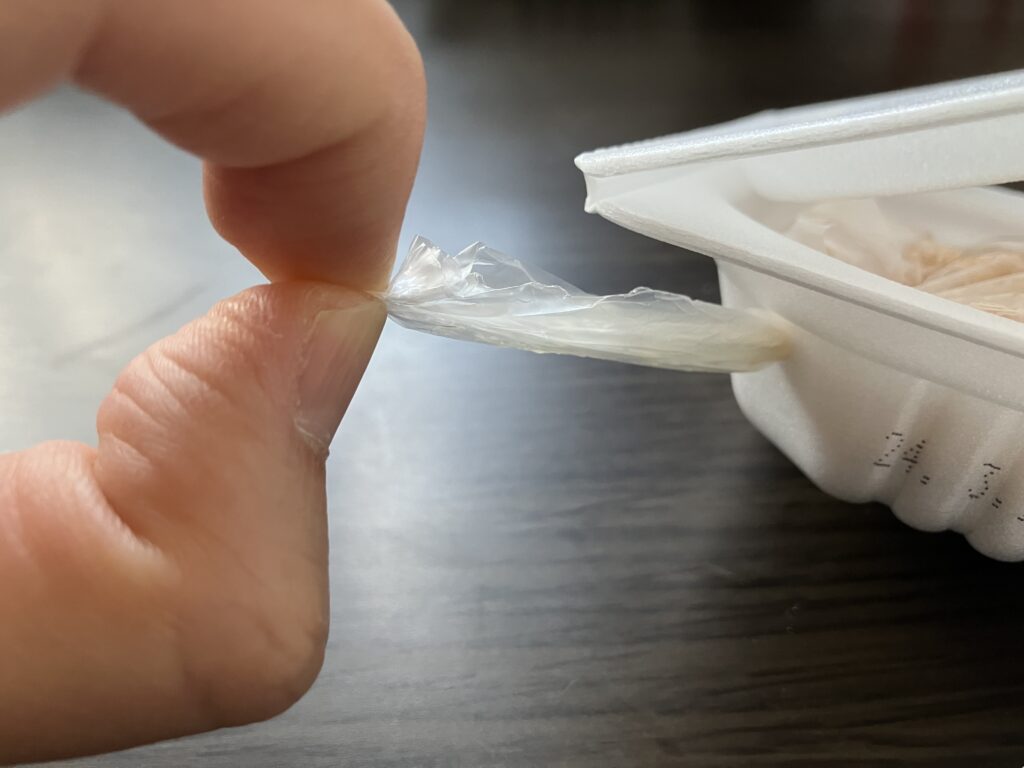
perforated type
This is just FYI because your mom might get mad at you at the dinner table.Punch a hole and pick out the film that has been pushed out with it.By the way, if you do this with ground natto, it will be very difficult, so be careful w
Let’s move on to the next step!
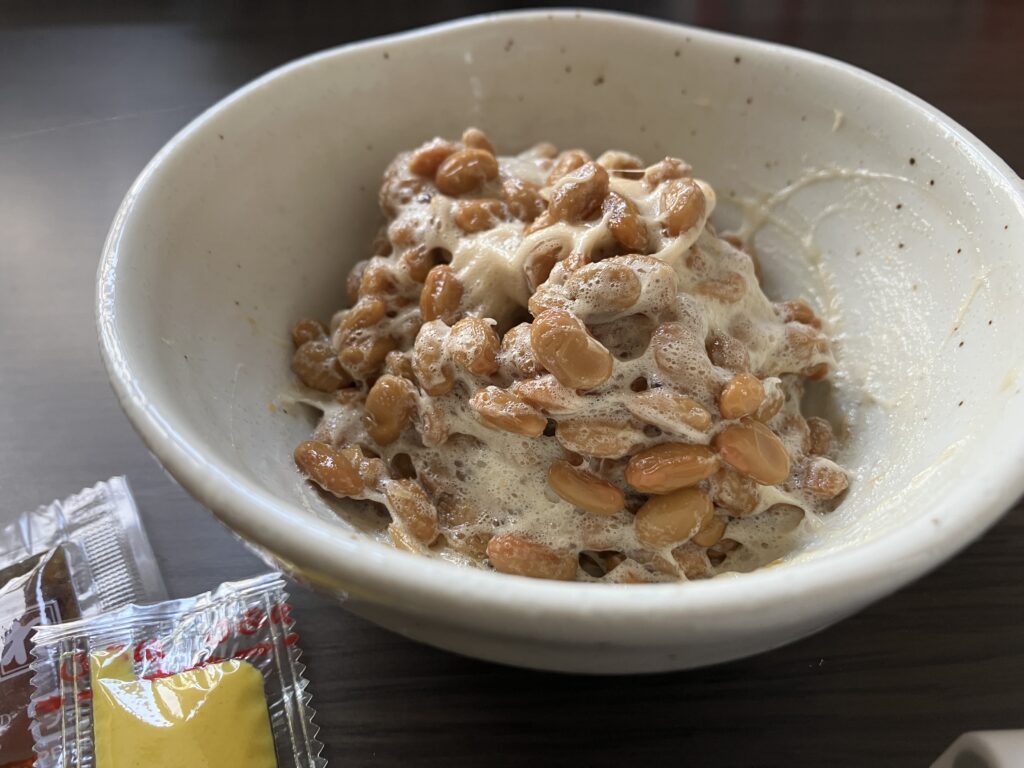
Spet3 Stir natto
Stirred with chopsticks about 100 times. It becomes stickier. Some people say it is better to stir a lot. I prefer this level of stirring because if I stir too much, the soybeans will be crushed.
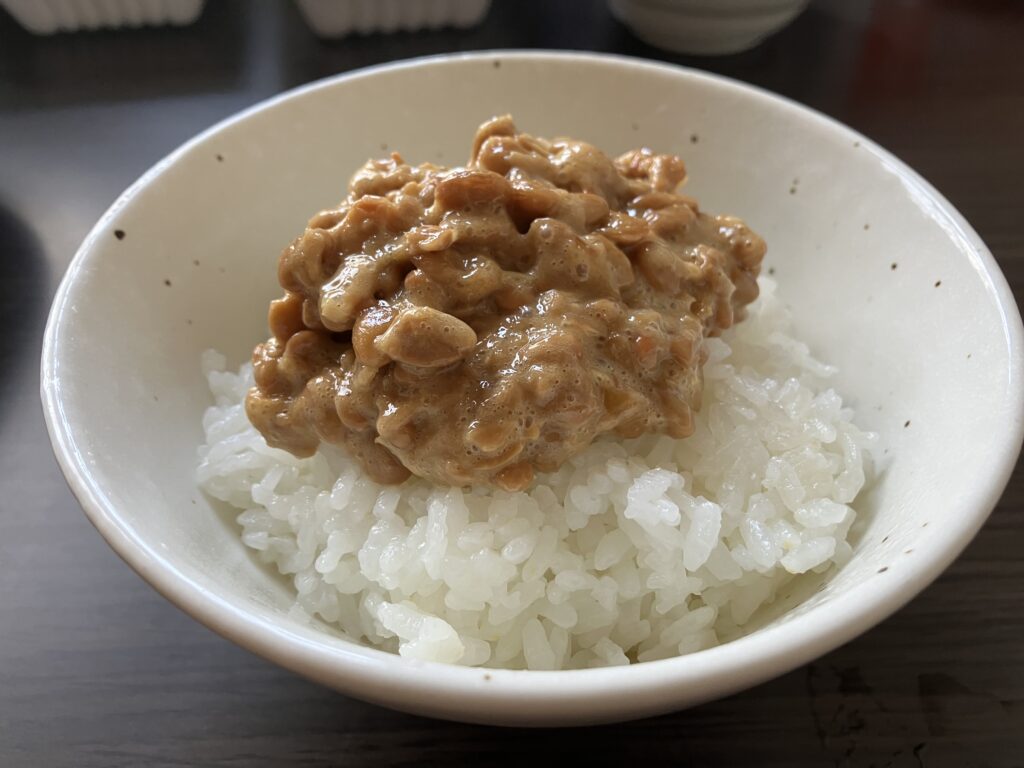
Finally, add the sauce and karaage and mix lightly. The most standard way to eat it is on a bed of warm rice.
Natto is rich in B vitamins. In particular, vitamin B2 is a necessary nutrient for the skin and mucous membranes, and plays a role in keeping pathogens out of the body. So this leads to improved immunity. In addition, the bacillus natto contained in natto is believed to reduce bad bacteria and increase good bacteria in the intestines. Japanese people are said to have a long life expectancy compared to the rest of the world, and natto may be one of the reasons why Japanese people eat natto.
Recommended toppings for natto
Here are some of the standard toppings. Although different people may have different preferences, I think it is true that people enjoy the change in flavor. It is also useful to make it a little gentler if you do not like the unique aroma of natto.
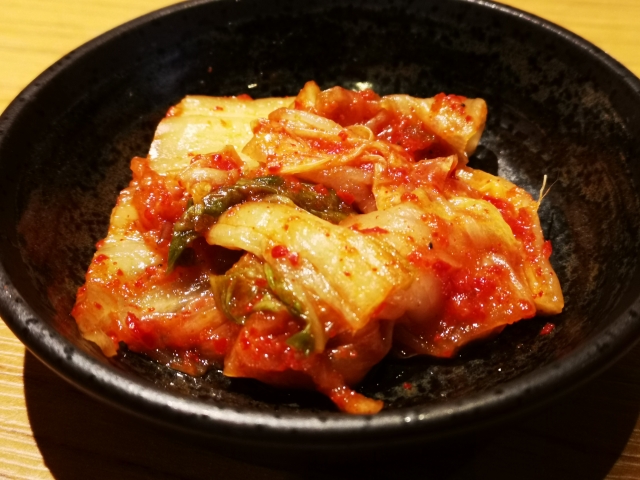
・Kimchi (a food made from a vegetable called Chinese cabbage in Korea)
This issued food originated in Korea, a country neighboring Japan. Kimchi is rich in lactic acid bacteria, making it the strongest combination of natto and lactic acid bacteria to improve the intestinal environment.
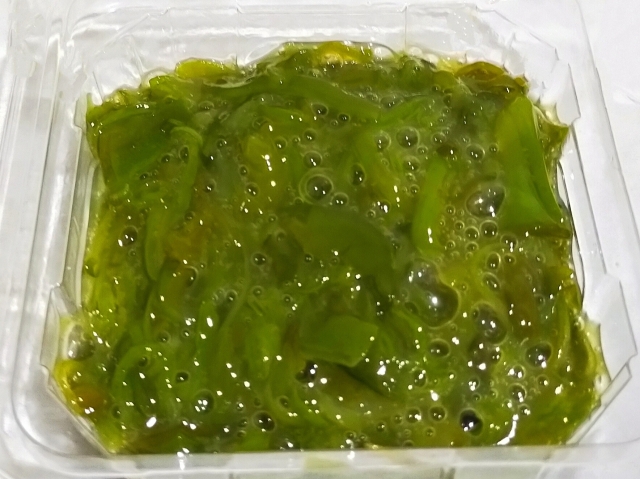
・Mekabu (Sticky Seaweed)
Sticky seaweed. The combination of natto and mekabu is a good match.
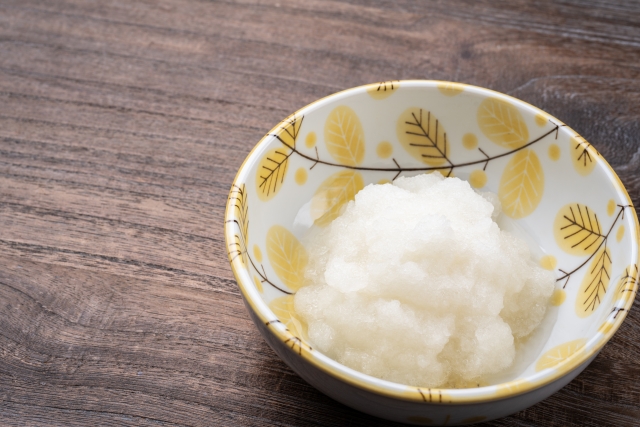
・Grated daikon radish
This food is made by grating a vegetable called daikon. It plays a supporting role in all aspects of Japanese cuisine.
If you do not like the aroma of natto, adding grated daikon makes it a little gentler.
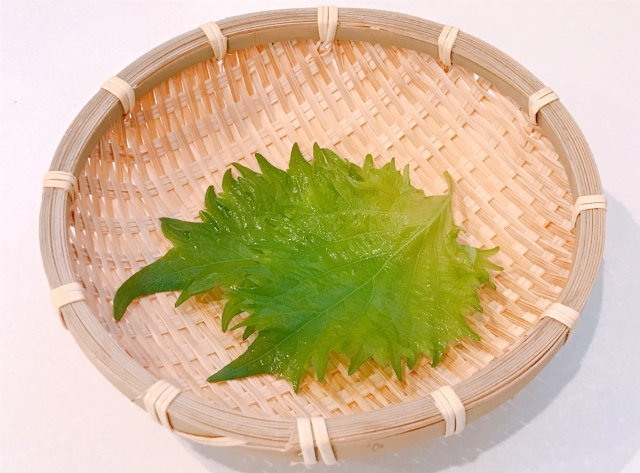
・Perilla
The leaves of the Perilla family of plants. When chopped, it has a fresh aroma. This is also commonly found on Japanese tables.
It goes very well with natto.
Plant growth utilizing Bacillus natto
Natto, or fermented soybeans, is known to help improve soil and promote plant growth due to the bacillus natto contained in its consistency. The simplest example of how it is used is as follows
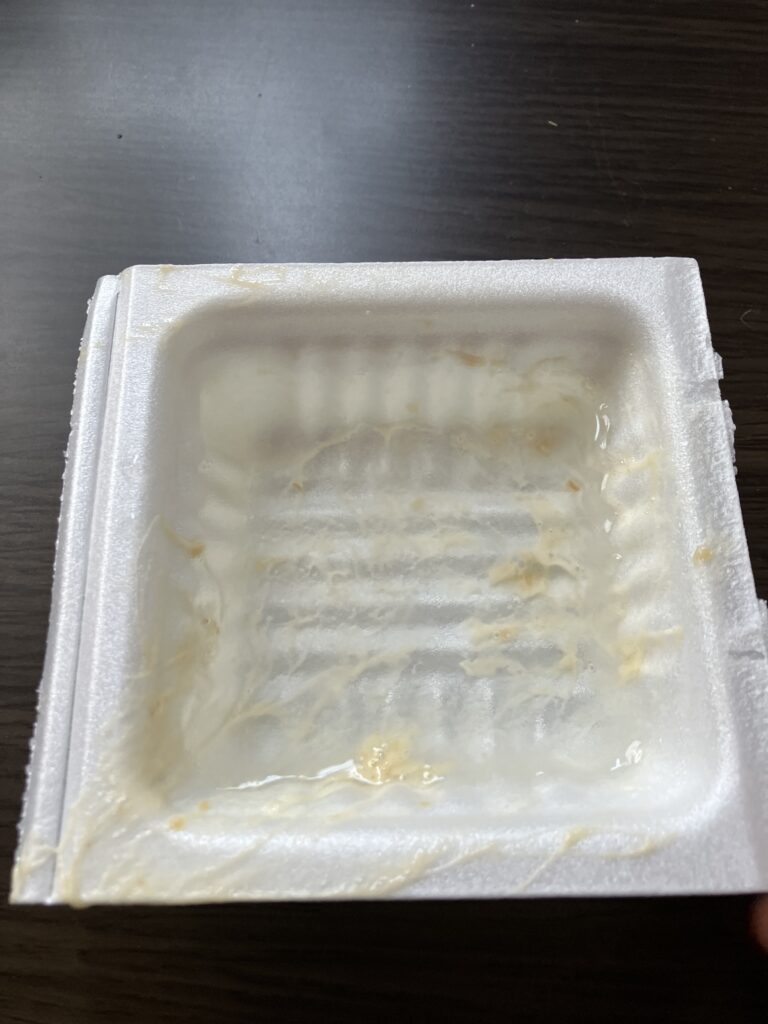
Prepare a pack of natto after eating. Note here that the “sauce” and “mustard” are not used in this situation. Next, pour hot water into this pack. The best temperature is about 40 degrees Celsius. This is said to be the temperature at which the bacillus natto is most active. After letting this sit for a little while, pour it over the soil. That is all.
This alone is said to soften the soil and prevent plant pathogens from working.
Natto is a superfood that is not only edible but also environmentally friendly!

