
“Sword of Passion: The Saga of Shinsengumi in Japan’s Turbulent Era”
My name is Kimura and I live in the northern part of Tokyo. Today I would like to introduce a book. It may not be very informative as it does not seem to be published in English, but it is by Ryotaro Shiba. Ryotaro Shiba is a popular novelist in Japan. I have checked and found that his works “Saka no ue no Kumo” (Clouds over the Hill) and “Ryoma!” (The Dragon Horse Goes) are published in English.
I am worried about the quality of the translation because the book I am going to introduce in today’s blog contains a lot of old Japanese words. I had A.I. translate it for me, and I hope it comes across well.
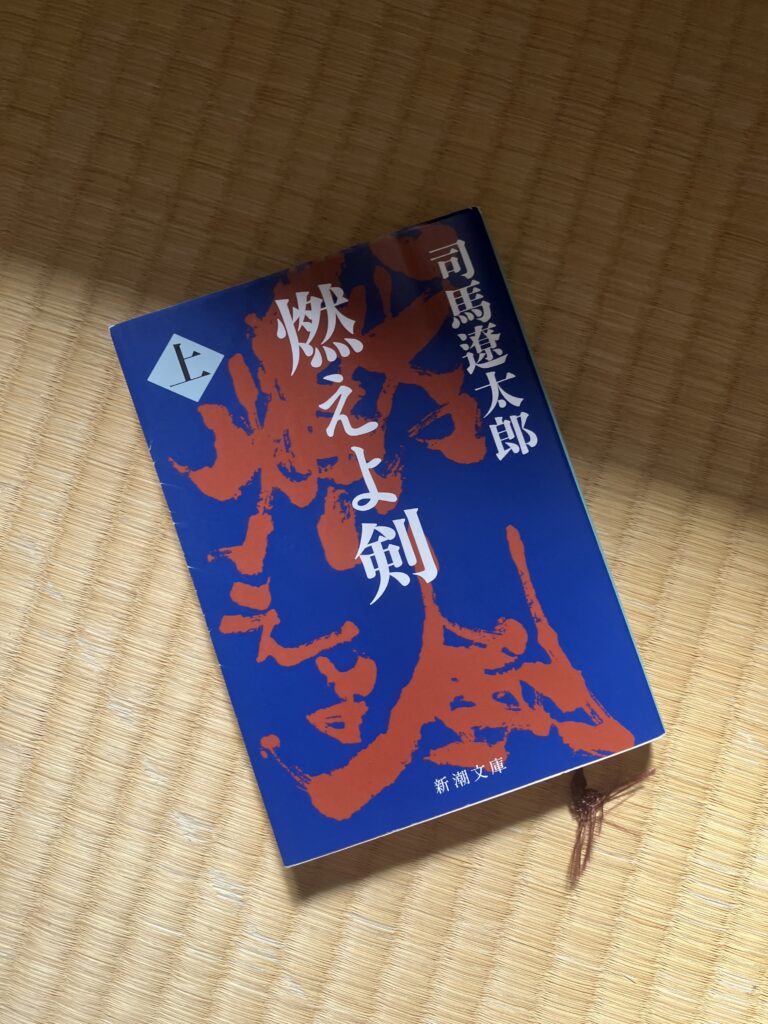
“Sword of Passion” (“Moe yo Ken”) by Ryotaro Shiba is a masterpiece of historical fiction that vividly portrays the lives of those who navigated the tumultuous period of Japan’s late Edo era. At its heart lies the captivating story of the Shinsengumi, with its charismatic leaders—Isami Kondo and Toshizo Hijikata—whose unwavering dedication and inner conflicts come to life on these pages. The title itself, “Moe yo Ken,” not only evokes the blazing swords of battle but also symbolizes the burning justice, ideals, and dreams within people’s hearts.
The Shinsengumi: Guardians of the Shogun
The Shinsengumi emerged as a special police force directly under the Tokugawa Shogunate, entrusted with maintaining order in Kyoto. Their path was one of strict adherence to their beliefs, even when enforcing harsh rules. Ryotaro Shiba skillfully weaves historical facts into a human drama, allowing readers to experience the social atmosphere and the struggles of that era.
Exploring Bushido: Lessons from “Sword of Passion”
For foreign readers, “Sword of Passion” serves as a valuable gateway to understanding Japanese history and culture. Through the backdrop of the late Edo period and the spirit of Bushido, readers can grasp the Japanese identity and values. Themes of friendship, love, betrayal, duty, and confronting mortality resonate across borders, bridging cultures and evoking empathy.
Beyond Historical Fiction: Probing Human Dignity
“Sword of Passion” transcends mere historical fiction—it challenges us to contemplate human dignity and the essence of life. Ryotaro Shiba provides deep insights through the inner struggles and growth of his characters. By reading this work, we confront our own existence and ponder our paths.
A Universal Message and Timeless Value
Ryotaro Shiba’s “Sword of Passion” carries a universal message and timeless value. As a representative work of Japanese literature, it will continue to be passed down through generations. Within its pages, the tale of the Shogun and the Shinsengumi becomes a symbol of courage and hope not only for Japan but for readers worldwide.

