
- Tourist-friendly sushi restaurants
- High-end omakase sushi
- Neighborhood sushi shops
- Convenience store and supermarket sushi
Sushi You Won’t Find in Tourist Guides – Loved by Locals, Crafted by Experts
Hello! I’m Kimura, a resident of northern Tokyo.
It snowed in Tokyo recently, but not enough to accumulate or disrupt transportation. According to the weather forecast, temperatures will be rising soon—meaning cherry blossom season is just around the corner!
Today, I want to introduce you to some sushi I had recently. But don’t expect anything extravagant! This isn’t about famous sushi spots in Ginza or Shinjuku. Instead, I’ll be sharing the kind of sushi that locals in northern Tokyo love.
In Japan, sushi is not just a luxury food—it’s part of daily life. While tourists often visit high-end sushi restaurants, locals enjoy sushi at neighborhood shops that offer quality and freshness at reasonable prices. Each region has its own beloved sushi spots, where skilled chefs prepare sushi with care and expertise. What I’m introducing today is what I consider a typical, standard sushi experience in Tokyo.
Takeout Sushi from a Local Shop
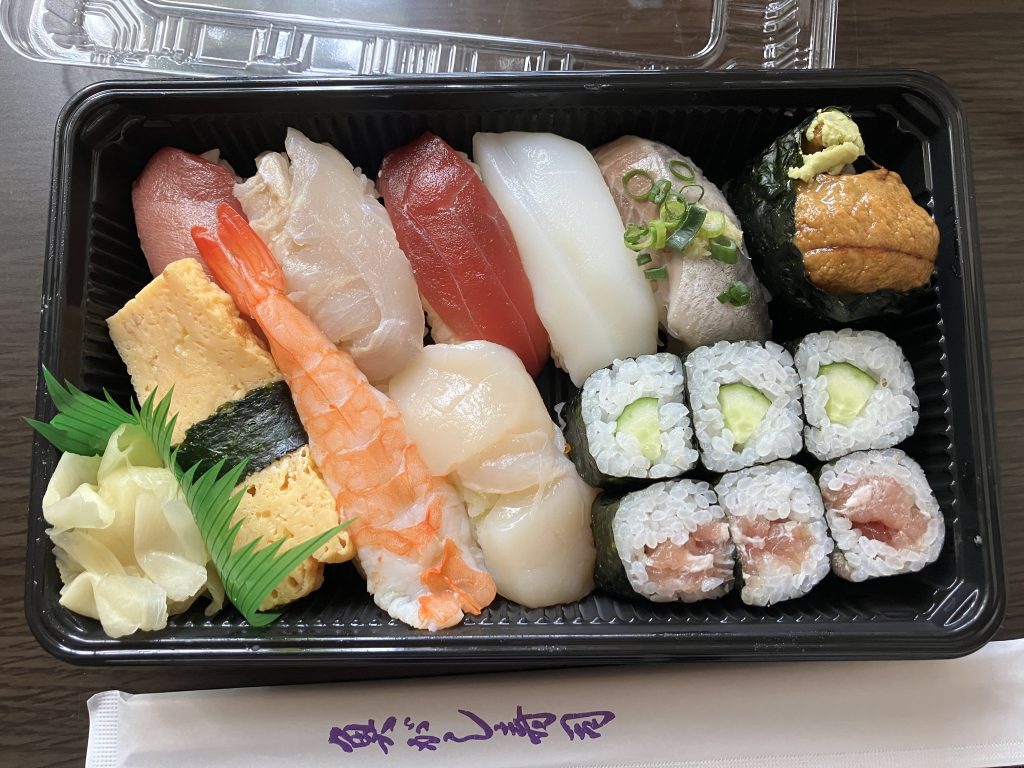
This time, I got my sushi as takeout.
Sushi restaurants in Japan often categorize their sets as Jō-Sushi (上寿司, premium sushi) and Toku-jō Sushi (特上寿司, special premium sushi). The higher the grade, the better the selection of fish. In this case, Toku-jō is the top-tier option.
The sushi in the photo is a Jō-Sushi set with an extra piece of scallop (hotate), which I ordered separately. (You can see the scallop next to the shrimp on the right.) Since I opted for takeout, it came in a plastic container, and I enjoyed it at home.
Now, let’s take a closer look at some of my recommended sushi toppings!
Recommended Sushi Toppings
① Shrimp (Ebi)
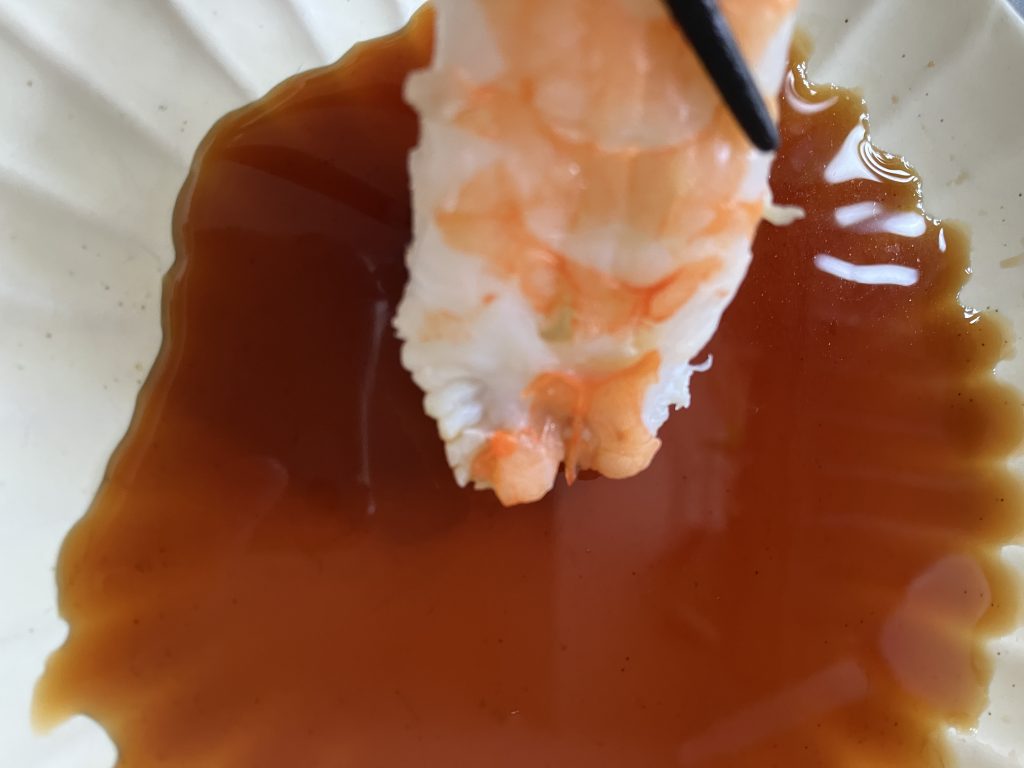
Shrimp is a staple ingredient in Japanese cuisine, and it’s just as essential in sushi.
🐟 ② Sardine (Iwashi)
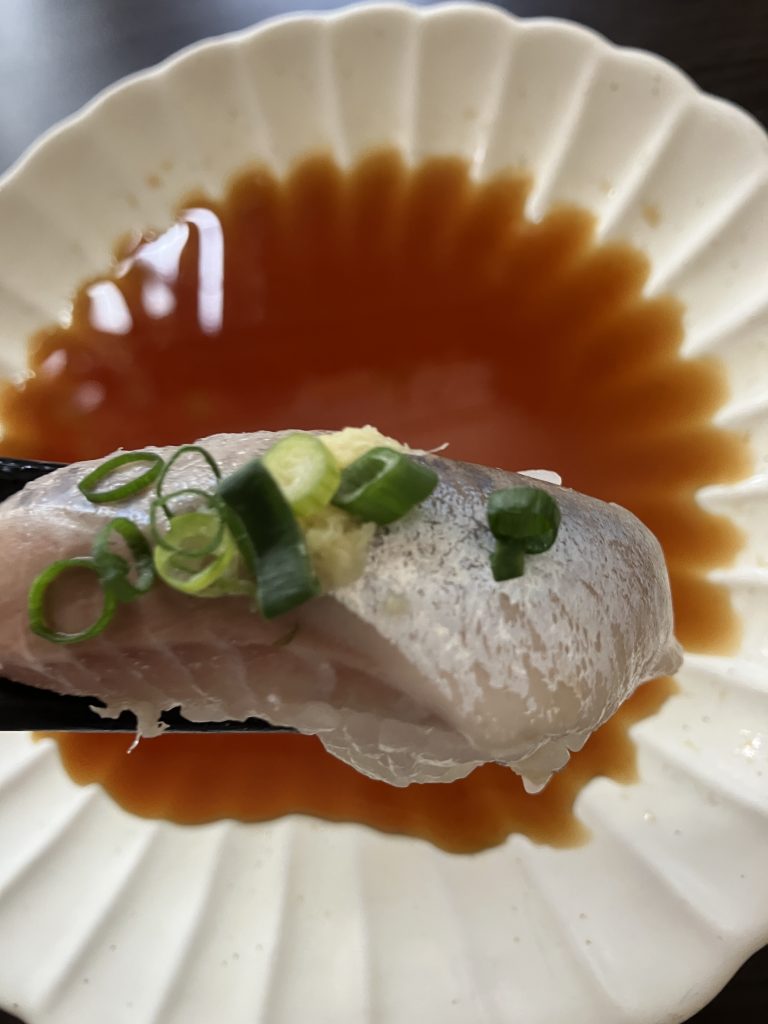
Sardines are an oily fish, but the yellow garnish on top is grated ginger, which balances out the flavor beautifully. In sushi culture, shiny-skinned fish like sardine and horse mackerel (aji) are called Hikari-mono (光物, “silver-skinned fish”). If you want an authentic sushi experience, definitely try these!
🐟 ③ Tuna (Maguro)
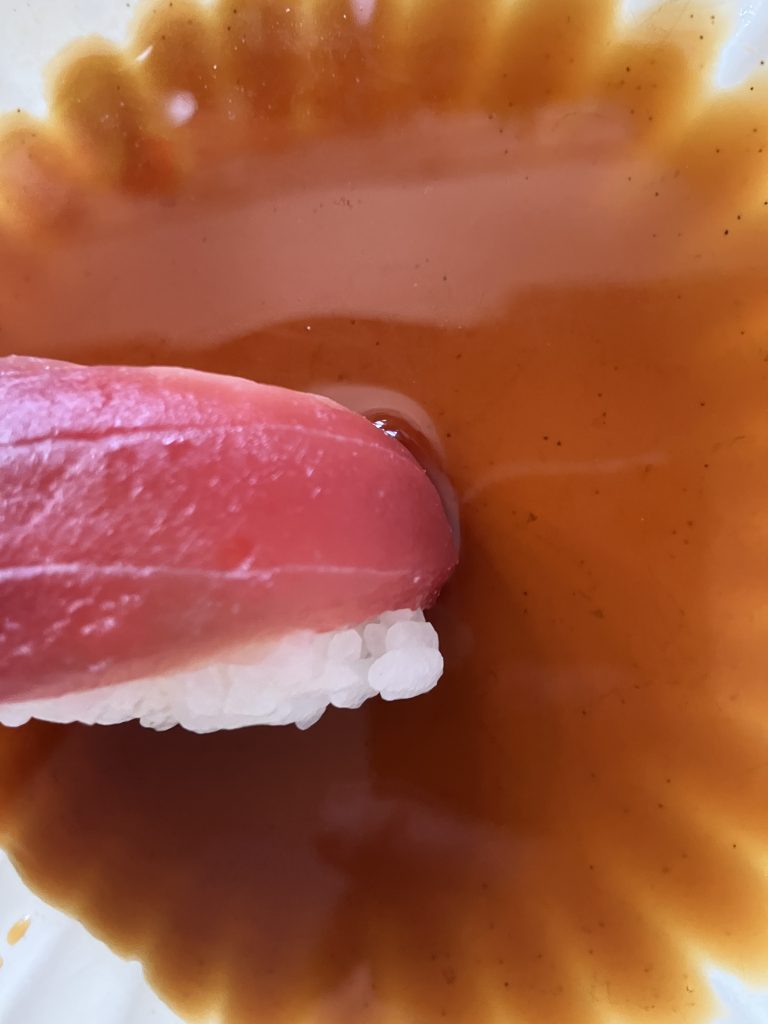
Tuna needs no introduction—it’s one of the most popular sushi toppings. Writing about it now makes me crave it again!
🦑 ④ Squid (Ika)
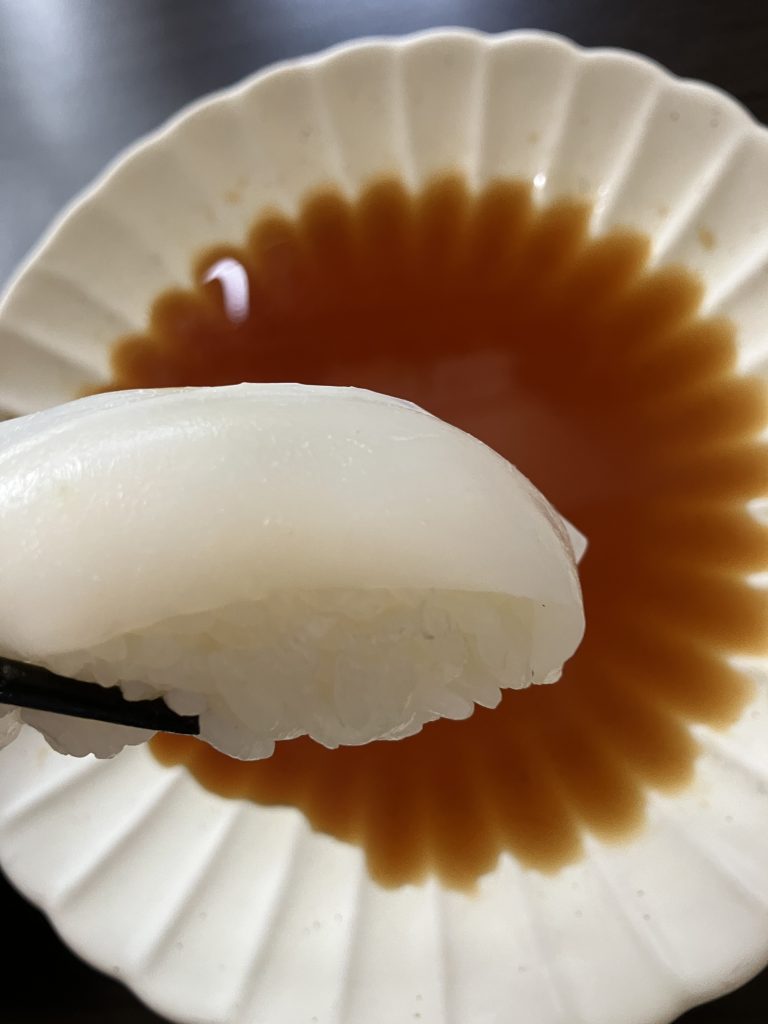
Squid has a firm yet tender texture, and different varieties have slightly different levels of chewiness. Have you ever felt a sharp sting in your nose while eating squid sushi? That’s because squid pairs exceptionally well with wasabi!
🐟 ⑤ Fatty Tuna (Toro)
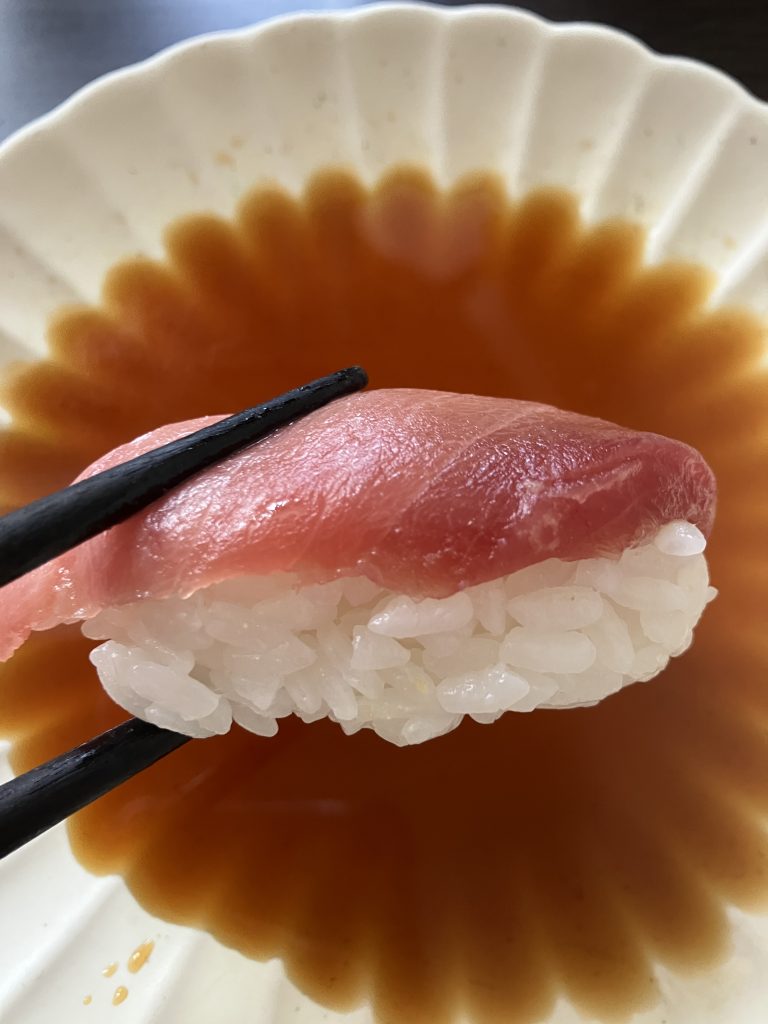
Unlike regular tuna, toro comes from the fattier part of the fish and has a lighter pinkish-white color. There are different grades, including Ōtoro (大トロ, extra fatty tuna), Chūtoro (中トロ, medium fatty tuna), and Toro (トロ, standard fatty tuna).
While Ōtoro is famous for being a luxury item, I personally love the balance of fat and lean meat in Chūtoro, as shown in the photo.
The Beauty of Everyday Sushi
Today, I introduced you to a sushi experience that’s not about Michelin stars or Instagrammable aesthetics. Instead, this is the sushi that locals eat—simple, high-quality, and satisfying.
That said, this isn’t something we eat every day! Sushi at a local shop is more of an occasional treat, enjoyed when you want to indulge a little.
In Japan, the word sushi covers a wide range of experiences:
Depending on the setting, prices and quality vary significantly.
By the way, the sushi I had today cost around 1,500–2,000 yen ($10–$14 USD)—a great price for the quality!
If you want to explore different styles of sushi in Japan, check out my past sushi articles too!

